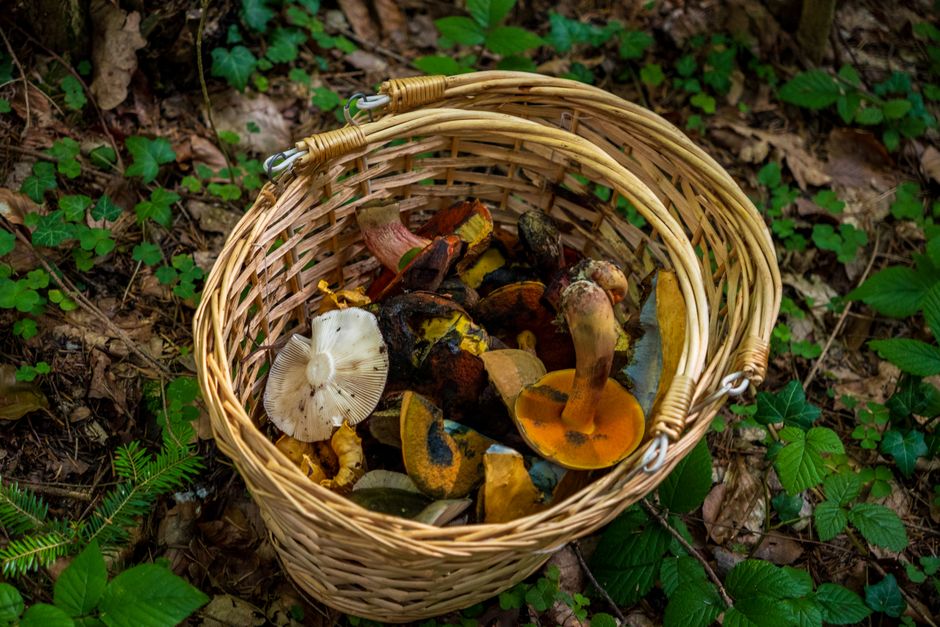
Gotland sits in the Baltic Sea with a microclimate noticeably milder than the Swedish mainland. That warmth, combined with the island's limestone bedrock and mixed woodland, creates conditions that foragers find genuinely interesting. Mushrooms, wild herbs, berries, and for those who know where to look, truffles can all be found across the island at different points in the season.
What grows on Gotland and when to go
The foraging calendar on Gotland roughly follows the broader Scandinavian pattern, but the mild microclimate means seasons can arrive a little earlier and linger a little longer than on the mainland. Spring brings wild garlic and nettles in sheltered spots. Summer opens up berry picking. You may come across lingonberries, blueberries, and in some areas the dewberry (salmbär), the same tart berry traditionally served with Gotland's famous saffron pancake. Late summer through autumn is prime time for mushrooms, with chanterelles and other edible varieties appearing in the island's forests and meadows.
Truffles are a more specialised pursuit. Certain truffle species are associated with the kind of limestone-rich, deciduous woodland that exists on Gotland, and local foragers do seek them out. Successful truffle hunting here typically requires local knowledge, the right season, and ideally a trained dog to locate buried specimens. Casual walkers are unlikely to stumble across truffles by accident.
Guided foraging experiences
Organised foraging walks and truffle hunting experiences are offered on Gotland, particularly in the warmer months. Guides with local knowledge can make the difference between a frustrating afternoon and a productive one, especially for truffles, which leave no visible sign above ground. Local tourism offices in Visby can point you toward current operators running these kinds of experiences, as availability can change between seasons.
On a guided walk you might expect to learn identification skills alongside the practical hunt, which species are safe, which are not, and how to harvest sustainably. Never eat anything you cannot confidently identify. This applies everywhere, but it is worth stating plainly: some toxic species in Sweden closely resemble edible ones, and foraging without knowledge carries real risk.
The rules: foraging rights in Sweden
Sweden's allemansrätten (the right of public access) allows people to move freely across most land and to pick berries, mushrooms, and flowers for personal use, including on privately owned land, provided you keep a respectful distance from homes and do not damage the environment. This legal right applies on Gotland as it does across the country.
- You may pick berries and mushrooms for personal use on most land.
- You may not damage trees, dig up plants by the root, or disturb nesting birds.
- Commercial harvesting may require landowner permission. Check locally if in doubt.
- Some protected nature reserves have specific restrictions on what is permitted inside their boundaries.
For truffles specifically, digging in soil means disturbing the ground, which is a different matter from picking surface mushrooms. If you plan to forage in an area with any protected status, verify the local rules before you dig.
Frequently Asked Questions
Q: Are there really truffles on Gotland?A: Local foragers do find truffles on Gotland, particularly in limestone-influenced woodland. The island's geology is considered suitable habitat for certain European truffle species. A guided truffle hunt gives you the best chance of success, as truffles grow below ground and require specific knowledge or a trained dog to locate.
Q: Do I need a permit to forage on Gotland?A: Under Sweden's allemansrätten, picking berries and mushrooms for personal use is a legal right on most land. However, some protected areas may have local restrictions, and commercial harvesting is a separate matter. When in doubt, check with local tourist information in Visby or with the landowner directly.