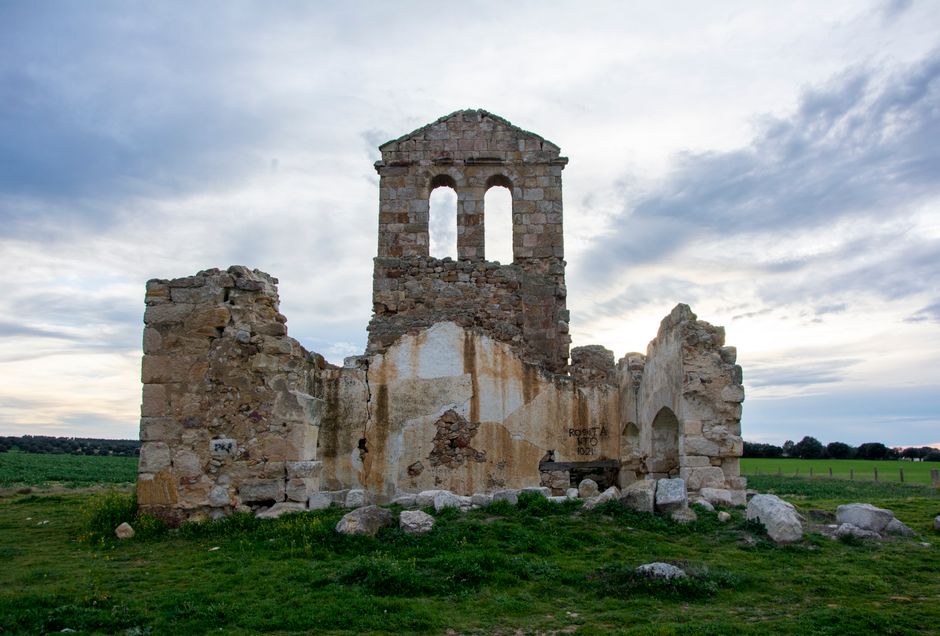
Few places in Scandinavia carry the weight of the medieval period quite the way Gotland does. Across the island, churches built between the 12th and 15th centuries still stand in fields, forests and village centres — some fully intact, others reduced to roofless walls and empty window arches open to the sky. These ruins are not cordoned-off heritage sites surrounded by information boards. Many sit quietly in the landscape, approachable and unhurried, exactly as they have for centuries.
Why so many medieval churches on one island?
Gotland was a prosperous trading hub during the medieval period, and that wealth left a permanent mark on the landscape. The island's roughly 92 surviving medieval churches — built across several centuries — represent one of the densest concentrations of medieval ecclesiastical architecture anywhere in northern Europe. Not all of them survived intact. Some were damaged by war, fire or neglect over the centuries, and a number were never fully rebuilt. What remains in those cases are the shells: stone walls, arched doorways, the occasional tower. Remarkably, the quality of the Gotlandic limestone used in their construction has allowed even the ruins to endure far longer than might otherwise be expected.
What to expect when you visit a church ruin
Gotland's church ruins vary considerably in their state of preservation. Some retain substantial walls and identifiable interior spaces, giving a clear sense of the original building's scale. Others are fragmentary — a gable end, a doorway, a scatter of dressed stone reclaimed partly by vegetation. Most are in rural settings, which adds to their atmosphere but also means facilities are minimal or absent nearby.
A few practical points worth knowing before you go:
- Access is generally straightforward for the ruins themselves, but the surrounding land may be privately farmed. Stick to paths and treat the sites with care.
- Signage varies. Some ruins are marked from nearby roads; others are easy to miss. A detailed map or a reliable offline navigation app is genuinely useful.
- Opening arrangements differ from site to site. Some of the intact medieval churches allow visitors inside during summer months; ruins are typically open-air and accessible year-round. Check locally before making a long detour.
- Combine with the broader landscape. Many ruins sit close to raukar coastlines, farmland or other medieval churches, so it is worth planning a loose route rather than visiting a single site in isolation.
The ruins in context: connecting them to Gotland's wider history
Visiting the church ruins makes much more sense after a few hours at Gotlands Museum in Visby — also known as Fornsalen. The collections there cover the island's medieval period in depth, and seeing carved stonework and architectural detail in the museum gives you a sharper eye for what you are looking at when you stand in front of a ruined nave. The museum also holds the Spillings Hoard, the largest Viking Age silver treasure ever found, discovered near Othem in 1999 and weighing more than 60 kilograms — a reminder of how long Gotland has been at the centre of Baltic trade and history.
Visby itself, a UNESCO World Heritage Site since 1995, provides another layer of context. The medieval city wall — approximately 3.5 kilometres long and originally featuring 44 towers — shows the same building tradition and the same limestone craftsmanship visible in the rural churches. Walking the wall and then driving out to a church ruin the same afternoon is a straightforward and rewarding combination.
Frequently Asked Questions
Q: Are Gotland's church ruins free to visit?A: Most open-air ruins can be visited without charge, as they sit in or adjacent to public areas. Admission arrangements at intact medieval churches nearby may differ — it is worth checking locally or with the Gotland tourist office before your visit.
Q: When is the best time of year to visit the church ruins?A: The ruins are accessible year-round, but summer brings the most comfortable conditions and the longest daylight hours. If you are visiting in August, Medieval Week in Visby makes a natural companion to any tour of the island's medieval sites.